

NRIs returning to India may find that their credit card requirements change after their residential status changes. A credit card that was suitable while living abroad may not offer the same benefits, fees, or convenience after returning to India. Choosing the right credit card can help you manage your expenses, earn rewards, access travel benefits, and reduce unnecessary charges.
There are several credit cards available for NRIs and returning NRIs, each offering different benefits and eligibility requirements. This guide covers the best credit cards for NRIs returning to India in 2026, along with their fees, benefits, eligibility criteria, and important factors to consider before applying.
Key Takeaways
- ✔ Compare annual fees, forex markup, finance charges, ATM fees, and other applicable card costs before choosing a credit card.
- ✔ Returning NRIs with limited or no Indian credit history can consider eligible FD-backed credit cards to start building their CIBIL profile.
- ✔ Choose a card based on your spending pattern, whether it is mainly domestic, international, travel-related, or lifestyle-focused.
- ✔ Keep required documents ready, such as PAN, identity and address proof, income details, and updated resident banking/KYC information.
- ✔ Compare rewards, cashback, lounge access, forex benefits, surcharge waivers, and other features based on your actual spending needs.
- ✔ Use your credit card responsibly, pay bills on time, and avoid multiple applications to gradually build a stronger Indian credit history.
What is an NRI credit card?
An NRI credit card is designed to help Non-Resident Indians handle their spending in India as well as overseas. These cards generally support domestic and international payments and may offer features such as worldwide acceptance, reward benefits, and convenient cross-border transactions. In many cases, an NRI credit card is issued against a fixed deposit linked to an NRE or NRO account, with the FD amount influencing the available credit limit. Among the credit card options available to NRIs, secured credit cards can be a practical choice for those looking for flexible access to credit.
Factors To Consider When Choosing Best Credit Cards for NRIs
- Fees: NRI credit cards may come with several charges, including joining, annual, and processing fees. Compare these costs carefully to understand the overall expense of the card.
- Finance Charges: Check the interest rate applicable to outstanding credit card balances. It is also useful to compare finance charges and cash advance fees offered by different card issuers.
- International Acceptance: If you plan to use the card outside India, check where it is accepted. Make sure the card works in the countries and at the merchants where you are likely to spend.
- ATM Usage: Cash withdrawals through ATMs in India or overseas may attract additional charges. Review the applicable withdrawal fees and limits before choosing a card.
- Card Protection: Look at the security features provided by the issuer in case your card is lost or stolen. Benefits such as emergency replacement and zero-liability protection can be valuable.
- Foreign Currency Markup Fee: International transactions may include a foreign currency markup fee. If you frequently make payments in foreign currencies, choosing a card with a lower markup can help reduce your overall costs.
- Other Charges: Check additional costs such as late-payment fees, card replacement charges, cancellation fees, and other service-related charges to avoid unexpected expenses.
- Payment Process: Before selecting a card, understand how you can pay your credit card bill. Depending on the bank, payment methods may include NEFT, IMPS, cheque, or cash.
Best Credit Cards for NRIs Returning to India
| Card | Annual Fee | Forex Markup | Best For |
| SBI Card ELITE | ₹4,999 + GST (waived on ₹10L annual spend) | 1.99% | Returning NRIs with an established income and moderate travel needs |
| IDFC FIRST WOW! Credit Card | ₹0 (Lifetime Free) | 0% | Rebuilding credit history from scratch, no income proof required |
| IDFC FIRST WOW! Black | ₹0 (FD-backed premium variant) | 0% | Those wanting FD-backed security with a premium look and lounge access |
| HDFC Regalia Gold | ₹2,500 + GST (waived on ₹4L annual spend) | 2.0% + GST | Mid-premium spenders wanting a balanced rewards + travel card |
| ICICI Sapphiro | ~₹3,500 + GST | ~3.5% (verify current rate before publishing) | NRIs with an existing ICICI banking relationship |
| Axis Bank Neo | Low joining/annual fee (~₹250) | ~3.5% | Entry-level domestic spender, online shopping and dining discounts |
Detailed Card Reviews
SBI Card ELITE — Best for Established Returning NRIs

- Annual Fee: ₹4,999
- Forex Markup: 1.99%
- Domestic Lounge Access: 8 visits per year
- International Lounge Access: 6 visits per year through Priority Pass
- Fee Waiver: Available on ₹10 lakh annual spending
- Best For: Returning NRIs with a stable income in India
- Ideal For: NRIs who continue to make foreign-currency transactions or travel internationally
- Key Advantage: Lower forex markup compared with standard cards
IDFC FIRST WOW! Credit Card — Best for Rebuilding Credit

- Card Type: Secured / FD-backed credit card
- Minimum FD: ₹25,000 for NRIs
- Credit Limit: Up to 100% of the linked FD value
- Forex Markup: 0%
- Joining Fee: Nil
- Annual Fee: Nil
- Income Proof: Not required
- Best For: Returning NRIs with limited or no Indian credit history
- Key Advantage: Can provide access to credit without relying heavily on an existing Indian credit profile
HDFC Regalia Gold — Best Balanced Mid-Premium Option

- Card Type: Mid-premium credit card
- Joining Fee: ₹2,500
- Annual Fee: ₹2,500
- Fee Waiver: Available on ₹4 lakh annual spending
- Forex Markup: 2% + GST
- Lounge Access: Airport lounge benefits
- Rewards: Accelerated rewards on select lifestyle brands
- Other Benefits: Milestone vouchers
- Best For: Returning NRIs looking for a balance between rewards and travel benefits
- Key Advantage: Lower annual spending requirement for fee waiver compared with SBI Card ELITE.
ICICI Sapphiro — Best for Existing ICICI Customers
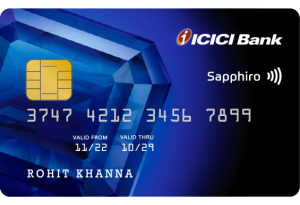
- Annual Fee: Approximately ₹3,500 + GST
- Forex Markup: Approximately 3.5%
- Lounge Access: Available
- Travel Benefits: Includes golf-related benefits
- Best For: Returning NRIs who already have an ICICI banking relationship
- Key Advantage: Convenience of managing banking and credit-card services with the same bank
- Consideration: Higher forex markup makes it less suitable for frequent international spending.
Axis Bank Neo — Best for Entry-Level Domestic Spending

- Annual Fee: Approximately ₹250
- Forex Markup: Approximately 3.5%
- Best For: Entry-level users and domestic spending
- Suitable For: Online shopping and dining-related offers
- Best For Returning NRIs: Those whose spending after returning to India is primarily domestic
- Key Consideration: Not the strongest option for frequent foreign-currency transactions.
Eligibility Criteria to apply for an NRI Credit Card
| Eligibility Criteria | Requirement Details |
| NRI Status | Applicant must have valid NRI status as per applicable banking and FEMA regulations. |
| Age Limit | Must meet the bank’s minimum and maximum age criteria (typically 21–65 years). |
| Valid Passport | Mandatory valid passport as proof of identity, citizenship, and NRI status. |
| Overseas Address | Valid foreign residential address proof (utility bills, work permit, rental agreement). |
| Indian Bank Account | Active NRE or NRO account required (depending on the card issuer). |
| Income / Financial Profile | Proof of employment, foreign salary slips, or overall financial stability. |
| Credit History | Indian CIBIL check where applicable; secured options available for those without credit history. |
| Documentation | Passport, valid Visa/Work Permit, local overseas address proof, and income proof/bank statements. |
| Fixed Deposit (If Applicable) | Secured NRI credit cards require an NRE/NRO FD as collateral for the credit limit. |
How to Apply For NRI Credit Card: Step-by-Step
- Confirm your residential status change with your bank so your NRE/NRO accounts are correctly reclassified before you apply — most banks require this to process a resident credit card application.
- Gather documents: PAN card, address proof (Aadhaar or utility bill), recent bank statements, and — if applying for an FD-backed card — proof of the fixed deposit.
- Check your CIBIL score if you have any prior Indian credit history at all; this determines whether unsecured cards are realistic yet.
- Apply for an FD-backed card first if you have no recent Indian credit file, rather than risking a hard inquiry rejection on a premium unsecured card.
- Set up autopay immediately on approval — on-time payment is the single biggest factor in rebuilding a CIBIL score quickly.
Advantages and Benefits of NRI Credit Card
- Reward Points: Earn reward points on eligible purchases made with an NRI credit card, whether transactions occur in India or overseas.
- Surcharge Waiver: Some NRI credit cards offer fuel surcharge waivers on eligible petrol pump transactions and selected railway bookings within India.
- Cashback: Depending on the card and ongoing offers, you may receive cashback on eligible transactions at the applicable cashback rate.
- Avoiding Currency Conversion Charges: Certain NRI credit cards can reduce or eliminate foreign currency conversion costs, helping frequent international users save on transaction expenses.
- Revolving Credit Option: Secured and unsecured cards may offer revolving credit, allowing interest-free periods and balance carry-forward subject to applicable terms.
- ATM Access: NRI credit cards may allow cash withdrawals through supported Visa or Mastercard ATMs, with availability depending on the card.
- Add-on Cards: Supplementary cards can be issued to eligible family members, allowing them to use the card independently for permitted transactions.
- Easy Payment Options: Credit card bills can generally be paid using eligible NRE, NRO, or FCNR accounts, depending on the issuer’s payment rules.

Common Mistakes Returning NRIs Make
- Relying on the foreign card too long. Continuing to use a US or UAE card as your primary card in India often triggers dynamic currency conversion fees and poor exchange rates on every single transaction.
- Ignoring the forex markup on a “mostly domestic” card. Even a few overseas subscriptions or one annual trip back can make a 3.5%-markup card meaningfully more expensive than a 2% or zero-markup alternative.
- Not updating account status promptly. Delaying the NRE/NRO-to-resident account conversion can complicate or delay credit card approval.
- Applying for several cards at once. Multiple hard inquiries in a short window can drag down a still-thin credit file exactly when you need it to look its strongest.
Conclusion
Choosing the best credit card for NRIs returning to India depends on your spending habits, credit history, travel needs, and banking relationship. A premium card such as SBI Card ELITE may suit established earners, while an FD-backed option can be more practical for those rebuilding their Indian credit history. Before applying, compare annual fees, forex markup, rewards, lounge benefits, eligibility, and payment options rather than choosing a card based only on its rewards. For returning NRIs, the right card should offer convenient spending, manageable costs, and an opportunity to build a strong Indian credit profile as their financial needs evolve.
Disclaimer
The content published on NriTaxs is intended for informational purposes only and does not constitute legal, tax, or financial advice. Readers are encouraged to consult qualified professionals before making any decisions based on the information provided.






Related Articles