
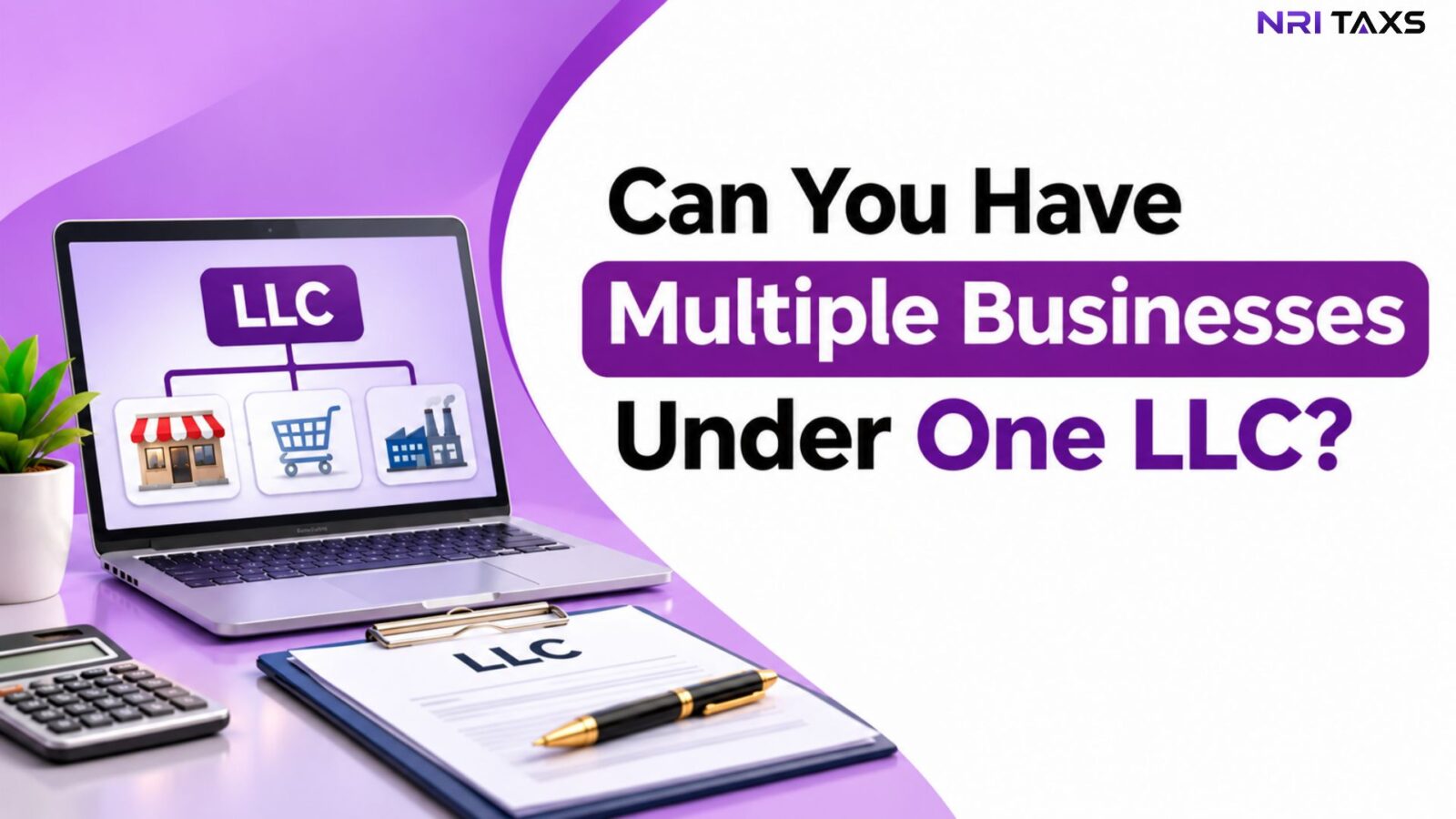
Running multiple businesses doesn’t always mean you need to form a separate LLC for each one. In the United States, business owners can generally operate multiple brands, online stores, or business activities under a single LLC, depending on state laws and licensing requirements. However, managing multiple businesses under one LLC involves important considerations related to liability, bookkeeping, EIN requirements, and tax filing. Understanding how these rules work can help you choose the right business structure and avoid compliance issues. This guide explains Can You Have Multiple Businesses Under One LLC, how multiple businesses operate under one LLC, how taxes are reported, and when forming separate LLCs may make sense.
Key Takeaways
- ✔ You can generally operate multiple businesses, brands, or online stores under one LLC.
- ✔ A single LLC can use multiple DBA names, subject to state registration requirements.
- ✔ Multiple businesses under one LLC generally use the same EIN.
- ✔ Tax filing depends on whether the LLC is single-member, multi-member, or elects S Corporation or C Corporation status.
- ✔ Separate income and expenses should be tracked for each business.
- ✔ All businesses under one LLC generally share the same liability exposure.
What Is an LLC?
A limited liability company (LLC) is a business structure that separates your personal assets from your business debts. If the business is sued or cannot pay its bills, your home and savings are usually protected. You form an LLC by filing documents with your state and paying a fee. It can have one owner (single-member) or several (multi-member). By default, the IRS taxes a single-member LLC like a sole proprietorship and a multi-member LLC like a partnership. Profits pass through to the owners’ personal tax returns. An LLC can also choose to be taxed as an S corporation or a C corporation.
Can You Have Multiple Businesses Under One LLC?
Yes, in most cases you can. An LLC is a legal entity, not a single business activity, so it can run several businesses at once. For example, one LLC can run a consulting service, an online store, and a rental property. Most states do not limit the number of activities an LLC can carry out, as long as each one is legal and properly licensed. You usually need to register each new business name as a DBA, and you must keep each business’s money and records separate. Also remember that all the businesses share the same liability. A lawsuit against one can reach the others. Some states and industries have special rules, so always check your local requirements first.
Benefits of Having Multiple Businesses Under One LLC
- Lower costs: You pay one state filing fee and one annual report fee instead of several, which saves money as you grow.
- Less paperwork: You maintain one legal entity, one registered agent, and one set of state filings, so administration stays simple and manageable.
- Easier tax filing: A single-member LLC reports income on your personal return, so you skip separate entity tax returns for each new venture.
- Flexible growth: You can test a new idea quickly under your existing company, using its established bank relationships, credit history, and reputation.
Disadvantages of Running Multiple Businesses Under One LLC
- Shared liability: A lawsuit or debt from one business can reach the assets of every other business inside that same LLC entity.
- Tougher bookkeeping: Income and expenses for each business must be tracked separately, which takes more time and discipline than running one venture.
- Risk mixing: Combining a high-risk business with a safe one puts the safe business at risk, and insurers may charge higher premiums.
- Extra registrations: Each business may need its own DBA registration, local license, or permit, and these costs and renewals can add up.
Can One LLC Own Multiple Brands or Online Stores?
Yes. One LLC can own many brands and online stores, such as a Shopify shop, an Amazon seller account, and a separate website. The LLC is the legal owner, and each brand is just a trade name. Marketplaces such as Amazon accept one LLC with several storefronts. Register each brand name as a DBA where required, use separate bank accounts, and track sales by brand. Also watch sales tax, because you may owe it in states where you meet economic nexus thresholds, no matter how many brands you run.
Can You Run Different Types of Businesses Under One LLC?
Usually, yes. An LLC is not limited to one industry, so you can run a consulting firm, a food truck, and a rental property under one name. Still, mixing very different businesses is not always smart. A high-risk activity, like construction or delivery driving, can expose your safer income to lawsuits. Licensed professions, such as law, medicine, and accounting, may require a professional LLC (PLLC), which usually limits the entity to that profession. Your insurance policy, licenses, and bank may also have rules.
Do You Need a Separate LLC for Each Business?
Not always. One LLC works for related, low-risk businesses. A separate LLC makes sense when a business is high-risk, has different partners, owns valuable assets like real estate, or may be sold later. Separate LLCs keep a lawsuit in one business from reaching the others, but they cost more in fees and paperwork. If you are unsure which setup fits you, it helps to see how LLC and S corp structures change your tax bill before deciding.
What Is a Series LLC? (A Structure Worth Knowing)
A series LLC lets one parent company create separate “series,” each with its own assets and liabilities. Only some states allow it, including Delaware, Texas, and Illinois. It can protect each business better than a single LLC, but court and tax treatment can vary by state. Talk to a professional before choosing it.
How to Run Multiple Businesses Under One LLC
Operate Multiple Businesses Under One Legal LLC
Form one LLC with your state and get an EIN if needed. Make sure your operating agreement allows several business activities. Then list the activities you plan to run and confirm each one is legal and covered by your state and local licenses.
Register Different DBAs (Doing Business As)
A DBA (doing business as) lets your LLC use a name different from its legal name. File a DBA for each business with your state, county, or city, depending on local rules. This lets you open bank accounts and sign contracts under each brand name.
Use Separate Brand Names for Different Businesses
Give each business its own name, logo, website, and social media accounts. Always show the LLC’s legal name on contracts, invoices, and terms of service. This builds separate brand identities while making clear that the same legal company stands behind every business.
Maintain Separate Business Records for Each Brand
Open a separate bank account for each business and track income and expenses by brand in your accounting software. Clean records make tax time easier and protect your liability shield. Knowing the documents needed to file LLC taxes also helps you stay organized all year.
How Are Taxes Filed for Multiple Businesses Under One LLC?
Taxes depend on how your LLC is classified. Here is how it works for each setup:
- Single-member LLC: The LLC is a disregarded entity, so all income is reported on your personal Form 1040.
- Separate Schedule C: Each distinct business activity usually needs its own Schedule C with the correct business code. Do not combine unrelated activities in one form.
- Self-employment tax: Net profit from each business is subject to self-employment tax (15.3%) in addition to income tax. Losses in one business can offset profit in another, subject to IRS rules.
- Multi-member LLC: The LLC files one Form 1065 covering all its activities and gives each member a Schedule K-1. For tax year 2026, the deadline is March 15, 2027.
- Tax election: An LLC can choose S corporation (Form 2553) or C corporation (Form 8832) treatment. Then it files Form 1120-S or Form 1120 instead.
- Estimated taxes: Owners usually pay quarterly estimated taxes using Form 1040-ES. If this is your first year filing, this step-by-step guide to filing LLC taxes for the first time can help.
- State and other taxes: Many states charge income tax, franchise tax, or annual fees. For example, California charges an $800 minimum annual tax. You may also owe sales tax and payroll tax for each business.
Do You Need a Separate EIN for Each Business Under One LLC?
When Can One LLC Use the Same EIN?
One LLC uses one EIN for every business it runs under its own name. Extra brands, product lines, and DBAs inside the same LLC do not need new numbers.
Does a DBA Need a Separate EIN?
No. A DBA is only a trade name, not a separate legal entity or taxpayer. Your LLC’s EIN covers every DBA it uses, and banks link each DBA to that number.
When Does a New LLC Need Its Own EIN?
Each separate LLC is its own legal entity and needs its own EIN, even if you own all of them. Never reuse one LLC’s EIN for another company.
Common Mistakes to Avoid When Operating Multiple Businesses Under One LLC
- Mixing money: Using one bank account for every business makes bookkeeping messy and can weaken your liability protection if a court sees personal and business funds blended.
- Skipping DBA registration: Operating under a brand name without registering the DBA can lead to fines, rejected bank accounts, and trouble enforcing contracts in your state.
- Combining high-risk and low-risk work: Placing a risky business, like contracting, beside a stable one exposes the safer income to lawsuits. Consider a separate LLC for risky work.
- Filing the wrong tax forms: Reporting different business activities on one Schedule C is a common error. Each distinct activity usually needs its own Schedule C and business code.

Conclusion
Yes, you can run multiple businesses under one LLC in most states, and it can save money and paperwork. Register a DBA for each brand, keep separate bank accounts and records, and file the right tax forms. Remember that every business shares the same liability, so keep risky ventures in a separate LLC. Use one EIN for the LLC, and get a new one only for a new LLC. If your setup grows complex, a tax professional can help.
Disclaimer
The content published on NriTaxs is intended for informational purposes only and does not constitute legal, tax, or financial advice. Readers are encouraged to consult qualified professionals before making any decisions based on the information provided.








Related Articles