
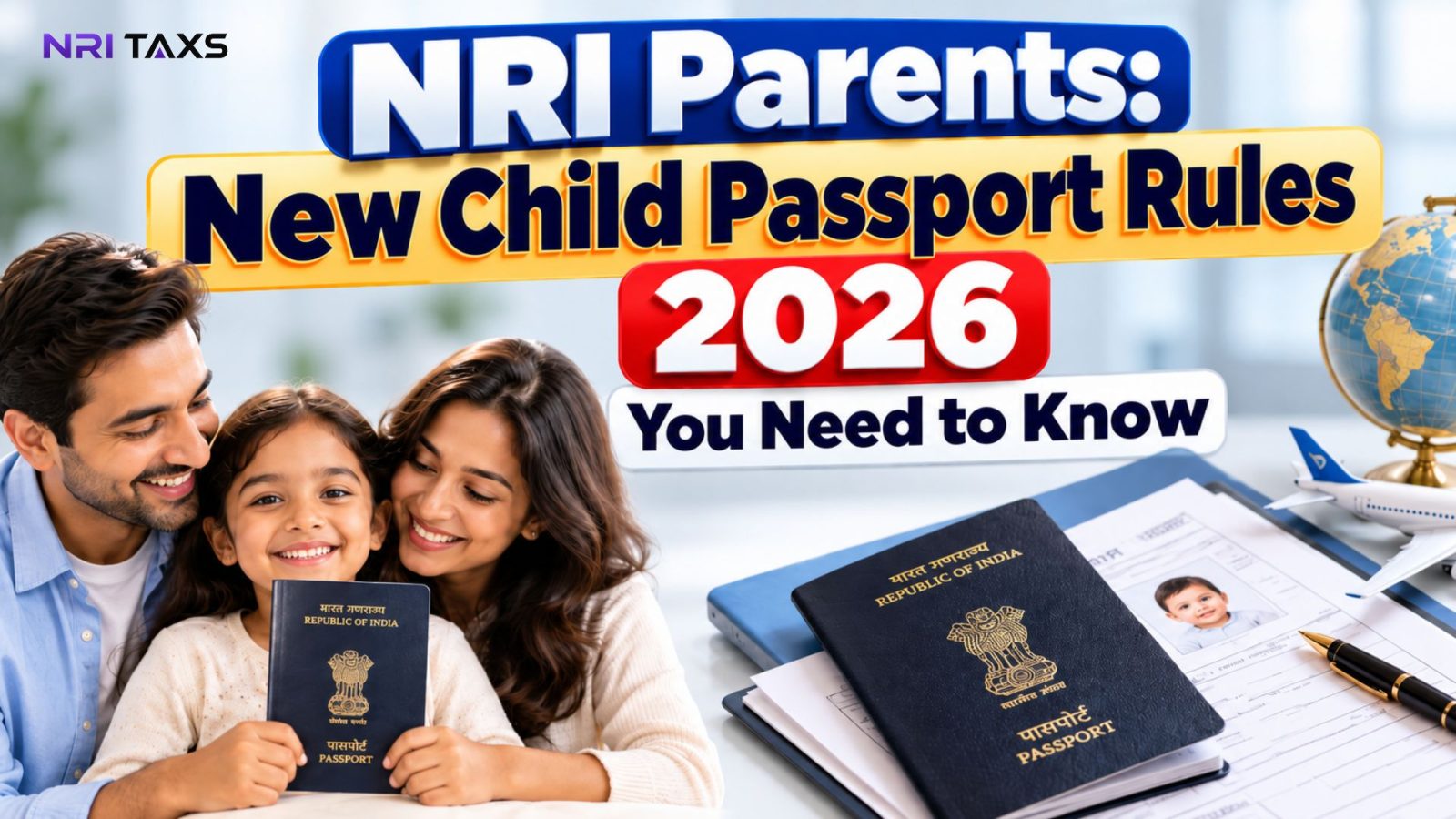
If you’re an NRI parent, you’ve probably faced the frustrating math of a child’s passport: apply when your son or daughter is 14, and the passport could expire again in barely a year. That’s exactly the problem the government just fixed. In September 2026, India changed how long a child’s passport stays valid, along with a few other updates that affect fees and documentation. Here’s exactly what’s new Child Passport Rules, why it matters if you’re raising a child abroad, and what to do about your child’s passport right now.
What Is the New Child Passport Rules in 2026?
On September 17, 2026, the Ministry of External Affairs notified the Passports (Amendment) Rules, 2026, changing Rule 12(1A) of the Passports Rules, 1980. Under the new rule, an ordinary 36-page passport issued to a child below 15 years of age is valid for five years from the date of issue, or until the child turns 18, whichever comes first.
Before this change, a child’s passport was valid for five years or until the child turned 15 whichever came first. That meant a passport issued to a 14-year-old was effectively valid for barely a year, forcing parents into a near-immediate renewal. The new rule removes that age-15 ceiling and pushes it to 18, so a passport issued closer to a child’s teenage years now carries real, usable validity instead of expiring almost as soon as it’s issued.
In simple terms: if your child is issued a passport at 10, it’s valid for the full five years, until they turn 15. If your child is issued one at 14, instead of expiring at 15, it now stays valid until they turn 18, nearly four extra years of validity on the same document.
Why Is This Important for NRI Parents?
- Fewer renewal trips for families abroad. NRI parents often can’t just walk into a passport office and travel back to the nearest Indian Mission takes planning, time off work, and sometimes an international flight. Fewer renewals mean fewer such trips.
- Less disruption to school and travel plans. A child whose passport unexpectedly nears expiry can face last-minute scrambles before a planned trip to India or elsewhere. Longer validity reduces the chance of a passport issue colliding with travel dates.
- One less document to track per child. Between PAN, OCI card, and school records, NRI families already juggle a lot of paperwork for their children. A passport that lasts longer is simply one fewer renewal to remember and schedule.
- Better alignment with OCI and visa processes. Many visa and OCI-related processes reference the passport’s validity. A passport that doesn’t suddenly expire mid-process reduces the risk of delays in other applications tied to it.
- More predictable costs over a child’s school years. Since renewal fees and Mission appointment costs add up, especially from abroad, stretching out the renewal cycle means fewer unplanned expenses scattered across your child’s growing-up years.
4 Other Important Passport Updates NRIs Should Know in 2026
Passport Fees Have Been Revised
Alongside the validity change, passport fees for minors have gone up. A 36-page fresh or reissue passport for a child under the normal category now costs ₹1,750, up from ₹1,000. Under Tatkaal (urgent processing), the fee has also increased. If you’re budgeting for a child’s passport application through your Indian Mission, check the current fee schedule before you apply, since Mission-specific service charges are usually added on top.
10% Fee Concession for Young Children
A 10% discount on fresh passport applications continues for children below 8 years of age. This concession applies only to fresh applications, not reissues, so if you’re renewing rather than applying for the first time, don’t expect the discount to carry over automatically.
Passport Applications for Minors Still Have Specific Parent/Guardian Requirements
The core requirement hasn’t changed: a minor’s passport application must be made by a parent or legal guardian, with their own identity and consent documentation attached. If you’re applying while abroad, this usually means submitting your own passport copy, proof of relationship to the child, and in many cases a notarized consent if only one parent is applying. These requirements sit alongside the documents needed to update your own PAN status to NRI, since both processes lean on the same core identity paperwork.
NRI Parents Must Check Their Indian Mission’s Latest Requirements
Every Indian Embassy or Consulate sets its own appointment process, accepted document formats, and sometimes additional local requirements on top of the national rules. Before you apply, check your specific Mission’s website rather than relying on a general guide, since processing timelines and required supporting documents can vary meaningfully between countries and even between consulates in the same country.
What Happens When a Child Turns 15?
The age-15 cutoff stops being relevant to validity. Once a child turns 15, the five-year-or-age-18 rule for under-15 passports no longer applies to them, since they’re outside the age band this amendment covers.
They become eligible for different passport options. Children aged 15 to 18 continue to have a choice between a minor-category passport and, depending on the applicable process, a full-validity adult-style passport.
Existing passports keep their printed expiry date. If your child already has a passport issued before turning 15, the amendment doesn’t retroactively change its expiry. The date printed on the document is still the one that counts.
Documentation needs may shift slightly. As children approach 18, some of their own documents like a PAN card used for KYC on investments held in their name start needing to reflect their own signature and details rather than a parent’s.
It’s a natural checkpoint to review all their documents together. Since passport, PAN, and OCI records often get updated around the same life stage, age 15 is a sensible point for NRI parents to check that everything is consistent and current.
Documents NRI Parents May Need for a Child’s Passport
| Document | Purpose |
| Child’s birth certificate | Primary proof of date and place of birth |
| Both parents’ passports | Establishes parentage and citizenship link |
| Proof of overseas residence | Required where the application is made through an Indian Mission abroad |
| Parental consent (notarized, if applicable) | Needed when only one parent is applying or parents live separately |
| Passport-size photographs | As per the Mission’s specified format |
| Marriage certificate of parents (where applicable) | Supports the parent-child relationship on record |
| Previous passport (for reissue) | Required if the application is a renewal rather than a fresh one |
How Can NRIs Apply for a Child’s Indian Passport?
- Identify the Indian Mission. Find the Embassy or Consulate with jurisdiction over your current place of residence, since passport applications must generally go through the Mission covering your area.
- Check the latest requirements. Visit that Mission’s official website to confirm current document lists, fee amounts, and appointment procedures before starting the application, since these can differ by location.
- Complete the online application. Most Missions require the application to be filled out through the Passport Seva portal before an in-person appointment or document submission step.
- Select fresh passport or re-issue as applicable. Choose the correct application category depending on whether this is your child’s first passport or a renewal of an existing one.
- Prepare documents. Gather the birth certificate, parents’ passports, consent forms, and photographs in the exact format your Mission specifies, since mismatched formats are a common cause of delay.
- Pay the applicable fee. Pay the revised fee for the category you’ve selected, keeping in mind the 10% concession if your child is under 8 and this is a fresh application.
- Book or complete appointment or submission. Depending on the Mission, this may mean an in-person appointment, a postal submission, or a scheduled document drop-off.
- Track the application. Use the reference or file number issued at submission to track progress through the Mission’s or Passport Seva’s tracking system.
- Receive the passport. Once processed, the passport is either collected in person or delivered, depending on the Mission’s process and any delivery options offered.
What Should NRI Parents Do If Their Child’s Passport Is Expiring?
If your child’s existing passport is nearing its printed expiry date, start the reissue process a few months ahead rather than waiting until a trip is already booked. Confirm whether your child now falls into a different age band than when the passport was first issued, since that can affect which category of renewal applies. If your child is turning 15 or 18 around the same time, it’s also worth checking whether other records tied to the passport like bank account KYC that lists the child as a minor account holder will need a matching update once the new passport is issued.
Common Mistakes NRI Parents Should Avoid
- Assuming every child’s passport has the same validity. Validity now depends on the child’s exact age at issuance, not a fixed five years.
- Using old fee information. Fees were revised in September 2026, so figures from older guides or forums may no longer be accurate.
- Applying under the wrong category. Fresh and reissue applications have different requirements and fee treatment, including the discount eligibility.
- Missing parent/guardian declarations. Incomplete consent documentation remains one of the most common reasons minor applications get delayed or returned.
- Ignoring Indian Mission-specific requirements. National rules set the baseline, but your specific Mission’s process can add extra local steps.
- Waiting until an international trip is close. Passport processing from abroad takes time, and last-minute applications leave little room for document corrections.

Conclusion
The 2026 child passport rule finally fixes a genuine headache for NRI families passports that expired almost as soon as they were issued. With validity now running to age 18 instead of 15, fewer renewal trips, and clearer documentation requirements, planning your child’s passport around school terms and travel dates becomes noticeably easier. Just remember to check your Mission’s specific requirements, budget for the revised fees, and keep related documents like PAN and OCI records updated alongside it.
Disclaimer
The content published on NriTaxs is intended for informational purposes only and does not constitute legal, tax, or financial advice. Readers are encouraged to consult qualified professionals before making any decisions based on the information provided.

Related Articles