

These days, many wealthy NRIs are not just investing in India, they’re putting their money into global markets as well. It’s not about following a trend, but about making smarter financial decisions to grow and protect their wealth. By investing internationally, they get access to better opportunities, reduce risk, and avoid depending on just one economy. With the world becoming more connected and investment options easier to access, going global has become a practical choice.
As we step into 2026, understanding why wealthy NRIs invest globally can help you make better decisions and build a stronger, more balanced portfolio for the future.
Who Are Wealthy Nris? A Quick Overview
Wealthy NRIs are typically defined as High Net Worth Individuals (HNIs) or Ultra High Net Worth Individuals (UHNIs) who reside outside of India. These individuals have accumulated significant capital through professions, business ventures, or other sources. Their primary financial goal is often not just wealth creation but also wealth preservation. They possess the financial capacity to explore diverse and international investment avenues, moving beyond traditional domestic options.
Read Also:- Why Nris Should Invest In India (Tax + Currency Angle)
Why Wealthy Nris Invest Globally?
The decision to invest internationally is driven by several key factors. These reasons help explain why wealthy NRIs invest globally, forming a core part of their financial strategy. Each factor addresses a specific aspect of wealth management, from spreading risk to accessing new growth areas.
Portfolio Diversification Benefits
One of the main principles of sound investing is diversification. By investing only in the Indian market, an entire portfolio is tied to the economic and political conditions of a single country. Global investing allows NRIs to spread their assets across different economies, industries, and currencies. This geographic diversification helps balance the portfolio, as a downturn in one market may be offset by growth in another.
Protection Against INR Depreciation
Currencies fluctuate in value. The Indian Rupee (INR), like any other currency, can experience periods of depreciation against major world currencies like the US Dollar (USD) or the Euro (EUR). Holding assets in these stronger, more stable currencies provides a natural hedge. It helps preserve the real value of an NRI’s wealth, ensuring that its purchasing power is not diminished by unfavorable exchange rate movements over time.
Access to Stable and Mature Markets
While India is a rapidly growing economy, developed markets like the United States, Germany, and Switzerland offer stability and maturity. These economies have long-established regulatory frameworks and deep, liquid financial markets. Investing in such markets provides a sense of security and predictability. It allows NRIs to allocate a portion of their capital to assets with a long track record of consistent performance and lower volatility.
Higher Returns and Growth Opportunities
Global markets offer access to industries and companies that may not be available in India. For instance, many of the world’s leading technology, biotechnology, and artificial intelligence companies are listed on international exchanges. By investing globally, wealthy NRIs can participate in the growth of these innovative sectors. This exposure to different growth engines can lead to potentially higher returns compared to a portfolio focused solely on one country.
Currency Hedging Advantages
For NRIs who earn and live in a foreign currency, investing in that same currency is a logical step. It eliminates the need to constantly convert funds and manage exchange rate risk. If an NRI earns in USD and plans to use those funds for future expenses like education or retirement in a dollar-denominated economy, investing in US-based assets makes practical sense. This alignment of currency simplifies financial planning significantly.
Top Global Investment Options For Nris
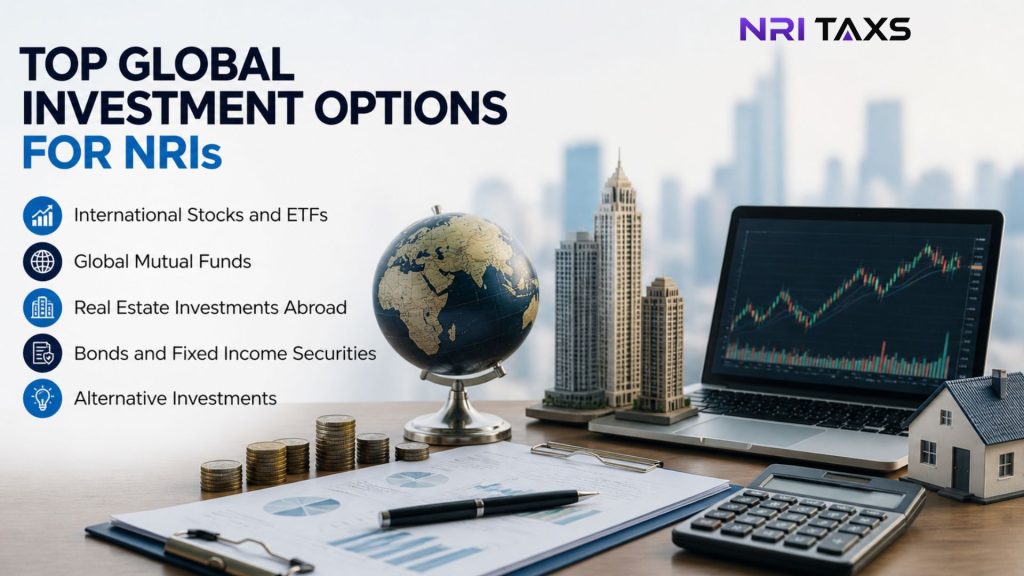
Wealthy NRIs have access to a wide array of investment vehicles to build their global portfolios. Each option serves a different purpose, allowing for a customized approach based on individual financial goals and risk appetite.
International Stocks and ETFs
Investing directly in the stocks of global companies like Apple, Google, or Nestlé is a popular option. It provides direct ownership and a share in the profits of these corporations. Exchange-Traded Funds (ETFs) offer an easier way to gain broad exposure. An ETF that tracks a global index, like the S&P 500, allows an investor to own a small piece of all the companies in that index with a single transaction.
Global Mutual Funds
Global mutual funds are investment pools managed by professional fund managers. These funds invest in a diversified portfolio of stocks, bonds, and other assets from around the world. For NRIs who prefer a hands-off approach, these funds are a suitable choice. The fund manager handles the research, stock selection, and ongoing management, providing a simple way to achieve global diversification.
Real Estate Investments Abroad
Investing in physical property in another country is a common strategy for wealth preservation. Residential or commercial real estate in cities like London, Dubai, or New York can provide rental income and potential for capital appreciation. It is also a tangible asset that is less correlated with financial markets, adding another layer of diversification to a portfolio.
Bonds and Fixed Income Securities
Government and corporate bonds issued by foreign entities offer a stable, income-generating component for a portfolio. Bonds from developed countries are often considered low-risk investments that provide regular interest payments. They are an effective tool for balancing the higher-risk equity portion of a global portfolio and preserving capital.
Alternative Investments
For those with a higher appetite for risk, alternative investments present unique opportunities. This category includes venture capital, private equity, hedge funds, and commodities. These investments are typically less liquid and more complex, but they offer the potential for significant returns. They allow wealthy NRIs to invest in private companies and specialized strategies not available in public markets.

Common Mistakes Wealthy Nris Should Avoid
- Ignoring tax implications in both India and the country of residence.
- Not understanding different rules for reporting foreign income and assets.
- Failing to do proper due diligence on global investments.
- Choosing unreliable or unverified international investment platforms.
- Underestimating currency fluctuation risks.
- Not planning for exchange rate impact while repatriating funds.
Future Trends in Global Investing for NRIs (2025 and Beyond)
- Technology will make global investing easier and more accessible
- Rise of digital platforms and fintech apps with lower fees
- Increasing access to international markets for retail NRI investors
- Growing popularity of thematic investing (AI, renewable energy, healthcare)
- Higher focus on long-term, trend-based investment strategies
- Rapid growth of ESG (Environmental, Social, Governance) investing
- More investors aligning financial goals with personal values
- Better transparency and data-driven investment decisions
Conclusion: Why Wealthy Nris Invest Globally
The reasons why wealthy NRIs invest globally are rooted in sound financial principles. Diversification, currency protection, and access to new growth opportunities are key drivers. As we approach 2026, building a globally diversified portfolio is becoming a standard strategy for long-term wealth preservation and growth. It allows NRIs to create a resilient financial foundation that is not dependent on the fortunes of a single economy.
Disclaimer
The content published on NriTaxs is intended for informational purposes only and does not constitute legal, tax, or financial advice. Readers are encouraged to consult qualified professionals before making any decisions based on the information provided.










Related Articles