

File Taxes in India for FY 2025-26 can seem daunting with all the changing rules and various income sources. But it doesn’t have to be! With the right information, you can navigate the process smoothly, avoid penalties, claim refunds, and comply with Indian tax laws.
This concise guide will help you understand the NRI tax filing process for the financial year 2025-26 (Assessment Year 2026-27). We’ll cover residential status, taxable income, necessary documents, ITR forms, deductions, DTAA benefits, online filing steps, and common mistakes to avoid. All the info is based on the latest guidance from the Income Tax Department. Let’s simplify tax season together!
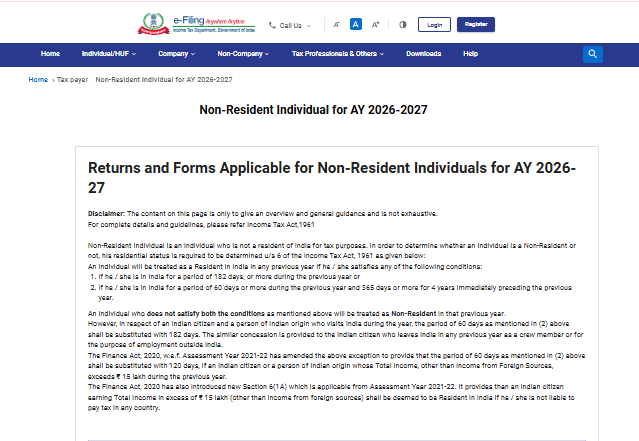
Understanding NRI Status Under Indian Income Tax Law
Before starting the tax filing process, it is essential to determine whether you qualify as a Non-Resident Indian (NRI) for income tax purposes.
An individual is generally considered an NRI if:
- They reside in India for less than 182 days during the financial year, or
- They do not meet the prescribed conditions for Indian residency under the Income Tax Act.
Determining your residential status is extremely important because it affects:
- Whether foreign income is taxable in India,
- Which ITR form must be filed?
- Whether foreign asset disclosure is required,
- Whether DTAA benefits can be claimed.
Indian taxation for NRIs differs significantly from that of resident taxpayers, as NRIs are typically taxed only on income that is earned, accrued, or received in India. incometax.gov.in
Who Needs to File Income Tax Returns in India?
NRIs are required to file Income Tax Returns (ITR) in India if:
- Their total taxable income in India exceeds the basic exemption limit,
- They wish to claim a TDS refund,
- They have capital gains from shares, mutual funds, or property,
- They earn rental income from property in India,
- They have business or professional income taxable in India,
- They need to carry forward capital losses.
Even when tax has already been deducted at source (TDS), filing an ITR may still be necessary to:
- Claim refunds,
- Report actual taxable income,
- Maintain tax compliance records.
Step-by-Step Guide to File Taxes in India for FY 2025-26
Take a look below to know about the steps to file your income tax online:
Step 1: Determine Your Residential Status
The first step in NRI tax filing in India is to identify your residential category:
- Resident
- Resident but Not Ordinarily Resident (RNOR)
- Non-Resident Indian (NRI)
The Income Tax Department uses the physical duration of stay in India to determine this status.
Why Residential Status Matters
Your residential status affects:
- The taxation of foreign income,
- Foreign asset disclosure requirements,
- DTAA applicability,
- Eligibility for exemptions.
For example:
- NRIs are generally taxed only on Indian income.
- Residents are taxed on global income.
This distinction is crucial for individuals working abroad while maintaining investments or property in India.
For any queries regarding tax filing and global investments, contact us today for professional assistance.
Step 2: Keep All Required Documents Ready
Before beginning the filing process, NRIs should organize all tax-related documents to ensure accurate reporting.
Identity & Compliance Documents
- PAN Card
- Passport
- Aadhaar Card (if applicable)
- Proof of overseas address
- Indian mobile number and email ID
Income & Tax Documents
- Form 16
- Salary slips
- Form 26AS
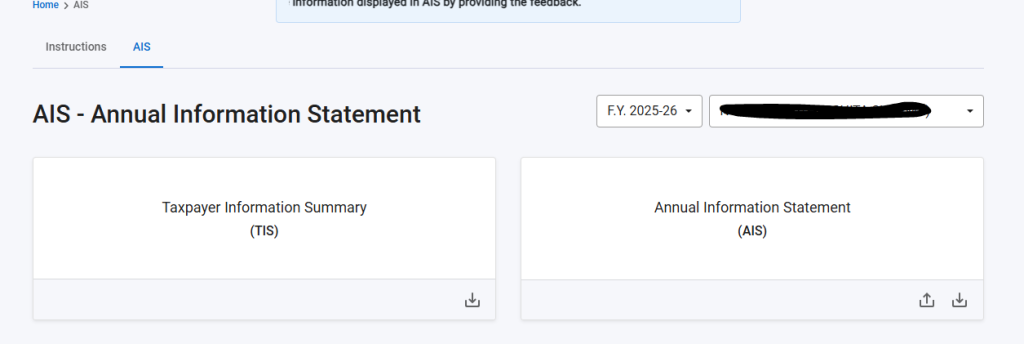
- AIS (Annual Information Statement)
- IS (Taxpayer Information Summary)
- Bank statements
- Investment statements
- Capital gains reports
- Property income records
Banking Documents
- NRO account details
- NRE account details
- Foreign bank information (if disclosure is applicable)
DTAA-Related Documents
- Tax Residency Certificate (TRC)
- Proof of foreign tax payment
- Form 10F (if applicable)
AIS and Form 26AS should always be reviewed carefully, as discrepancies may lead to notices or delayed refunds.
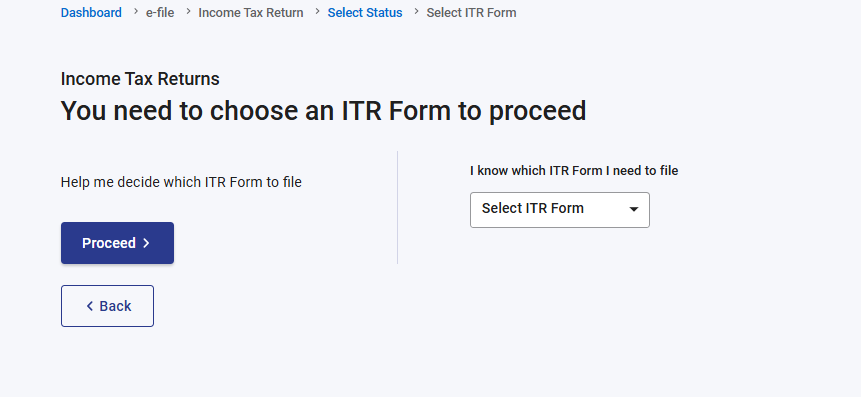
Step 3: Select the Correct ITR Form
Choosing the correct ITR form is a crucial part of NRI tax filing in India. Using the wrong form can result in defective return notices or delayed processing.
ITR-2 for Most NRIs
ITR-2 is generally used by NRIs who earn:
- Salary income,
- Rental income,
- Capital gains,
- Dividend income,
- Interest income,
- Foreign income that requires disclosure.
ITR-3 for Business or Professional Income
ITR-3 is applicable if the NRI has:
- Business income in India,
- Freelancing income,
- Consultancy income,
- Professional earnings taxable in India.
Most salaried NRIs and investors typically use ITR-2.
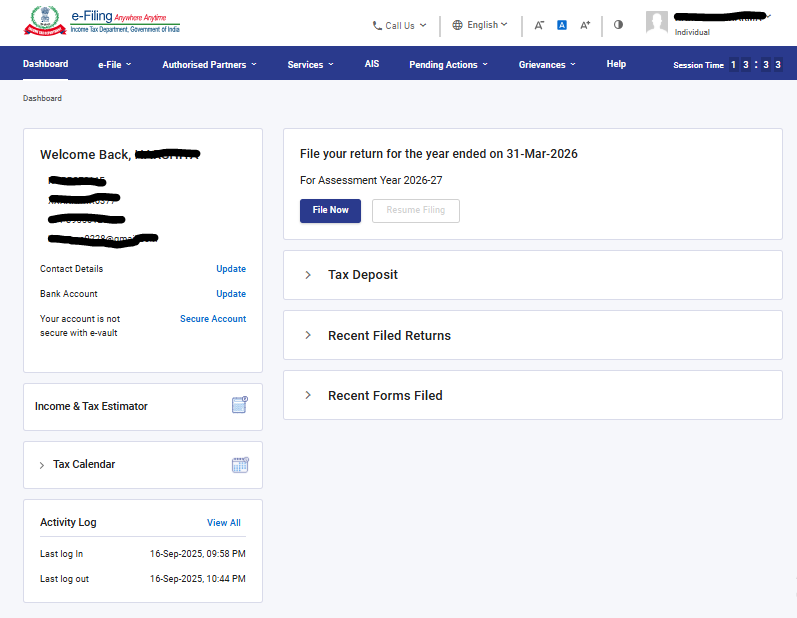
Step 4: Log in to the Income Tax e-Filing Portal
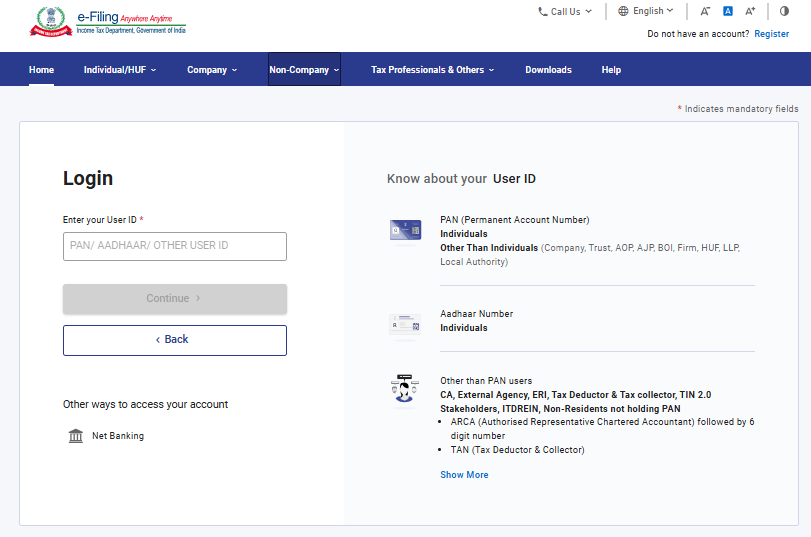
NRIs can file their returns online through the official Income Tax e-Filing portal.
Official Portal: Income Tax e-Filing Portal
Steps to Login:
- Visit the portal.
- Click “Login.”
- Enter your PAN number.
- Enter your password and captcha.
- Complete OTP verification.
After logging in:
- Navigate to “e-File.”
- Select “Income Tax Return.”
- Click “File Income Tax Return.”
The portal also provides access to:
- AIS,
- Refund tracking,
- Tax payment services,
- Return verification facilities.
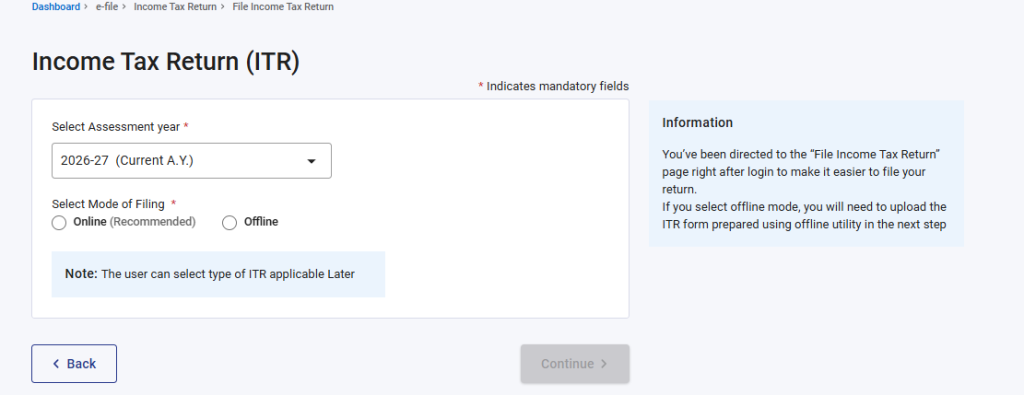
Step 5: Choose Assessment Year and Filing Method
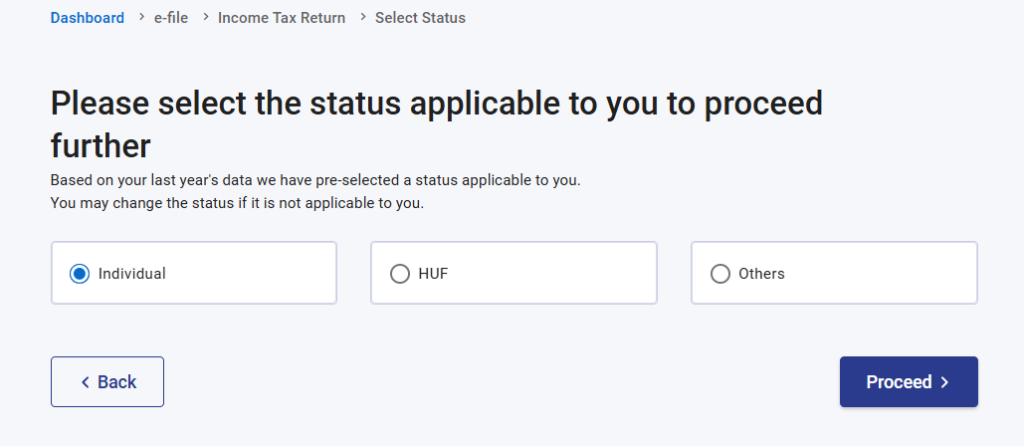
To begin the filing process, select the following options:
- Assessment Year: AY 2026-27
- Filing Mode: Online
- Taxpayer Category: Individual
Understanding Financial Year vs. Assessment Year
- FY 2025-26: The period during which income is earned
- AY 2026-27: The year in which taxes are filed for that income
Selecting the correct Assessment Year is crucial, as errors can invalidate your return.
Step 6: Report Taxable Income in India
Non-Resident Indians (NRIs) are generally taxed only on income earned or received in India.
Common Taxable Income Sources for NRIs
- Salary Income: Salary received for services rendered in India is taxable.
- Rental Income: Rental income from properties in India is taxable, regardless of the NRI’s place of residence.
- Capital Gains: Tax applies to the sale of:
- Property
- Mutual funds
- Shares
- Other investments in India
- Interest Income:
- Interest from NRO accounts is taxable.
- Interest from NRE accounts is usually exempt, subject to conditions.
- Dividend Income: Dividends received from Indian companies are taxable according to applicable slab rates.
NRIs should ensure that all taxable income earned in India is correctly reported.
Step 7: Claim Deductions Available to NRIs
NRIs can claim various deductions under the Income Tax Act, including:
Section 80C Deductions
Eligible investments may include:
- ELSS mutual funds
- Life insurance premiums
- Tuition fees
- Home loan principal repayment
Section 80D
Health insurance premiums may qualify for deductions.
Home Loan Benefits
NRIs may claim:
- A deduction on home loan interest under Section 24.
- A deduction on principal repayment under Section 80C.
These tax-saving deductions significantly reduce overall tax liability.
Step 8: Claim DTAA Benefits
India has Double Taxation Avoidance Agreements (DTAA) with many countries to prevent the same income from being taxed twice. DTAA benefits can help NRIs to:
- Reduce their tax liability
- Claim foreign tax credits
- Avoid double taxation
Documents Required for DTAA Claims
- Tax Residency Certificate (TRC)
- Proof of foreign tax paid
- Form 10F (if applicable)
NRIs earning income in multiple countries should carefully review the DTAA provisions relevant to their country of residence.
Step 9: Verify Form 26AS, AIS, and TDS Details
Before submitting the return, NRIs should reconcile:
- Form 26AS
- AIS
- TDS certificates
- Actual income records
Why This Step Is Important
Discrepancies may result in:
- Notices from the Income Tax Department
- Delays in refunds
- Additional tax demands
As the AIS captures a wider range of financial transactions compared to Form 26AS, this reconciliation is more important than ever.
Step 10: Preview and Submit the Return
After entering all relevant details:
- Review the complete return carefully
- Check if there is a tax payable or refund
- Verify bank account details
- Submit the return
Always double-check:
- Personal details
- Bank information
- ncome schedules
- Capital gains calculations
- Deduction claims before submission.
Step 11: Complete e-Verification
The ITR filing process is incomplete until the return is verified.
Available Verification Methods
- Aadhaar OTP
- Net banking
- Electronic Verification Code (EVC)
- Digital Signature Certificate (DSC)
Returns not verified within the prescribed timeframe may be deemed invalid.

Common Mistakes NRIs Should Avoid
- Selecting the Wrong ITR Form: Many NRIs mistakenly file ITR-1 instead of ITR-2.
- Ignoring AIS Mismatches: Income mismatches can lead to notices from tax authorities.
- Not Reporting Capital Gains: Capital gains must be disclosed even if TDS is deducted.
- Missing DTAA Claims: Failure to claim DTAA benefits can increase tax liability.
- Not Updating Bank Account Status: Resident savings accounts should be converted to NRO/NRE accounts after becoming an NRI.
- Incorrect Residential Status: Misclassifying residential status can lead to improper taxation of foreign income.
Latest Updates in NRI Tax Filing for FY 2025-26
Recent updates affecting NRIs include:
- Revised ITR utilities
- Expanded AIS reporting
- Stricter disclosure requirements
- Updated capital gains schedules
- Enhanced verification systems
Conclusion
Filing taxes as an NRI in India becomes significantly easier when approached systematically with updated knowledge and proper documentation. From determining residential status and selecting the correct ITR form to claiming deductions, reconciling AIS data, and completing e-verification, every step is essential for accurate tax compliance.
NRIs with multiple sources of income, capital gains, DTAA claims, or foreign asset disclosures should ensure all details are carefully reviewed before submission to avoid notices or processing delays.
Disclaimer
The content published on NriTaxs is intended for informational purposes only and does not constitute legal, tax, or financial advice. Readers are encouraged to consult qualified professionals before making any decisions based on the information provided.









Related Articles