
Popular Blogs
Your quick gateway to the most useful NRI tax and finance resources.

Aadhaar for NRIs & OCI Cardholders (2026): Eligibility, 182-Day Rule, Documents & Application Process
Aadhaar for NRIs: Do you really need to stay in India for 182 days before applying? Many Indians living abroad believe they must wait six months before they can get…
AIS vs Form 26AS Mismatch for NRIs: Fix It Before Filing Your ITR
When filing your Income Tax Return (ITR), you may notice that your Annual Information Statement (AIS) shows different…
RBI Repo Rate Hike to 5.50%: What NRIs Must Know About NRE, NRO & FCNR Accounts
The Reserve Bank of India (RBI) has raised the repo rate by 25 basis points to 5.50%, marking…

HDFC NRI KYC Update 2026: Online Process, Documents & Requirements
If you have an NRE or NRO account with HDFC Bank, keeping your KYC details up to date…
Gift City
View More
GIFT City Fund for NRIs (2026): How to Invest in Indian Mutual Funds in US Dollars
Want to invest in Indian mutual funds without first converting your US dollars into Indian rupees? For many…

Can NRIs Invest in GIFT City Without Selling Existing Investments?
GIFT City is emerging as a top investment hub for Non-Resident Indians (NRIs) seeking global opportunities. A common…

GIFT City Funds vs International ETFs for NRIs- Which is Better?
If you’re an NRI or global investor looking to invest in foreign markets, you’ve probably come across GIFT…
Global Investments
View More
Can OCI Buy Property in India Without Aadhar Card?
If you hold an Overseas Citizen of India (OCI) card and you’re planning to invest in real estate…

Can OCI Card Holder Invest in Indian Stock Market?
If you are a foreign citizen living abroad, you might be asking: Can OCI card holder invest in…

NRIs: Your India Investments Could Be Losing Money Without Following These 8 Rules
Millions of Non-Resident Indians invest in India every year in stocks, mutual funds, fixed deposits, and real estate.…
IPO & Stock Market
View More
IPO vs FPO vs OFS Explained: Simple Comparison Guide for Investors
An IPO, FPO, and OFS are all ways through which shares of a company are sold to the…

How to Check IPO Subscription Status Online?
Knowing “How to Check IPO Subscription Status Online?” is a practical step for any investor participating in the…

How IPO Pricing Works in the Stock Market: Beginner to Advanced Guide
Understanding How IPO Pricing Works is essential for investors entering the stock market. The IPO pricing process determines…
Mutual Funds
View More
NRI Mutual Fund Nominee Change: How to Add or Update a Nominee from Abroad
For NRIs, managing mutual fund investments from abroad can become complicated when family circumstances change. One detail that…

NRI Mutual Fund SIP in India 2026: How to Start, Rules & Tax
If you’re an NRI looking to invest in India every month, a mutual fund SIP can be a…

NRI Tax on Mutual Funds in India for UAE NRIs (2026): TDS, Capital Gains & DTAA
For UAE-based NRIs, investing in Indian mutual funds can be an effective way to participate in India’s growing…
Nri Banking
View More AIS vs Form 26AS Mismatch for NRIs: Fix It Before Filing Your ITR
When filing your Income Tax Return (ITR), you may notice that your Annual Information Statement (AIS) shows different…
RBI Repo Rate Hike to 5.50%: What NRIs Must Know About NRE, NRO & FCNR Accounts
The Reserve Bank of India (RBI) has raised the repo rate by 25 basis points to 5.50%, marking…
HDFC NRI KYC Update 2026: Online Process, Documents & Requirements
If you have an NRE or NRO account with HDFC Bank, keeping your KYC details up to date…
Nri Financial Planning
View More
How Much Money Does an NRI Need to Retire in India in 2026?
Planning to retire in India after spending years abroad sounds exciting but one question can make the decision…

How NRIs Can File Taxes in India for FY 2025-26
File Taxes in India for FY 2025-26 can seem daunting with all the changing rules and various income…

Is PF Withdrawal Taxable for NRIs? Find Out How to Save on Taxes!
To advance their careers, many individuals move abroad for better opportunities and income. However, becoming a Non-Resident Indian…
Nri Status, Tax & Compliance
View More
Parents Funding NRI Child’s Home Abroad: LRS Limit, TCS & Tax Rules
Many Indian parents want to help their NRI child buy a home abroad. It sounds simple, but the…

Who is an NRI? Full Form, Meaning, Eligibility & Tax Rules Explained
If you’ve recently moved abroad, or you’re planning to, one question comes up again and again: am I…

NRI Capital Gains Tax on Shares 2026: Rates, TDS & How to Save Tax
If you’re an NRI holding Indian shares, selling them can trigger capital gains tax and TDS obligations in…
Returning NRI
View More
Fast Track Immigration in India (FTI-TTP): Registration, Eligibility & Complete Guide for NRIs
Just landed in India after a long international flight and now you’re stuck in a long immigration queue?…
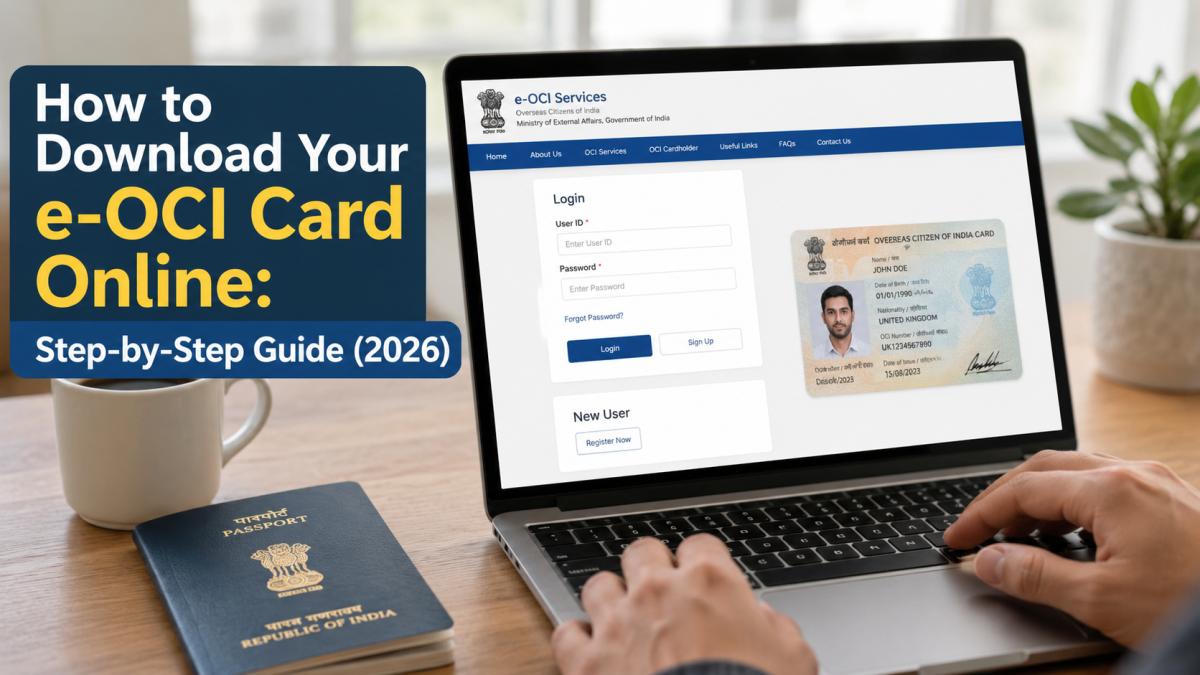
How to Download Your e-OCI Card Online: Step-by-Step Guide (2026)
Many OCI cardholders successfully receive their OCI approval but get stuck at the final step downloading their Electronic…

The Ultimate Financial & Tax Guide for H1B Holders Returning to India
Moving back to India after years on an H1B is exciting but it’s also the most financially complicated…
NRI PAN Card
View More
Aadhaar for NRIs & OCI Cardholders (2026): Eligibility, 182-Day Rule, Documents & Application Process
Aadhaar for NRIs: Do you really need to stay in India for 182 days before applying? Many Indians…

NRI PAN Card Name Change After Marriage: Documents & Online Process
Getting married is a big life event, and it often means changing your surname. If you are a…

NRI PAN Card Address Change 2026: How to Update Your Foreign Address Online
Still using your old Indian address on your PAN card after moving abroad? You may not notice a…
NRI Investments
View More
NRI Passport Renewal 2026: Documents, Fees, Process & Latest Rules
Your Indian passport is about to expire, and you’re living abroad? Don’t wait until the last minute. NRI…

Foreign Asset Disclosure Notice for NRIs: What to Do & Avoid Penalties
Receiving a foreign asset disclosure notice from the Income Tax Department can be stressful, especially for NRIs who…
FEMA Penalty for NRI Using Resident Demat Account After Status Change
You moved abroad, became an NRI, but your old resident Demat account in India is still active. Your…
Frequently Asked Questions
No matter what your source of income is, we've got you covered. There's a plan for everybody!
Can an NRI apply for Aadhaar without staying in India for 182 days?⌄
Yes. The 182-day rule does not apply to NRIs holding a valid Indian passport — they can apply immediately upon arrival in India.
Can an OCI cardholder get Aadhaar in India?⌄
Yes, but only after staying in India for at least 182 days in the 12 months immediately before applying, since OCI cardholders are classified as Resident Foreign Nationals.
Can an OCI cardholder apply for Aadhaar without completing 182 days in India?⌄
No. This requirement is strictly enforced for OCI cardholders, and applications submitted before completing 182 days are rejected.
Can NRIs apply for Aadhaar from the USA?⌄
No. Aadhaar enrolment requires in-person biometric verification, so NRIs based in the USA or elsewhere must travel to India and visit an authorised enrolment centre.
Can an NRI use an overseas address for Aadhaar?⌄
Generally no. Aadhaar is designed around an Indian address, so most NRIs use their Indian passport details and any Indian address available to them for enrolment.
Is an Indian mobile number mandatory for Aadhaar enrolment?⌄
No, but UIDAI does not support OTPs on foreign mobile numbers, so a valid email address becomes essential for receiving updates and completing verification steps.
Can Aadhaar be applied for completely online?⌄
No. Fresh Aadhaar enrolment always requires an in-person visit to an authorised centre for biometric capture, regardless of whether you're an NRI or an OCI cardholder.
Is Aadhaar proof of Indian citizenship?⌄
No. Aadhaar is proof of identity and residency, not citizenship, which is why even OCI cardholders and other foreign nationals can obtain one once they meet the eligibility criteria.
How long is Aadhaar valid for OCI cardholders?⌄
The Aadhaar number itself doesn't expire, but UIDAI requires periodic document updates roughly every ten years to keep the identity and address details current.
Is new Aadhaar enrolment free for NRIs and OCI cardholders?⌄
Yes. First-time Aadhaar enrolment is completely free for both NRIs and OCI cardholders; charges only apply later for demographic or biometric updates.