
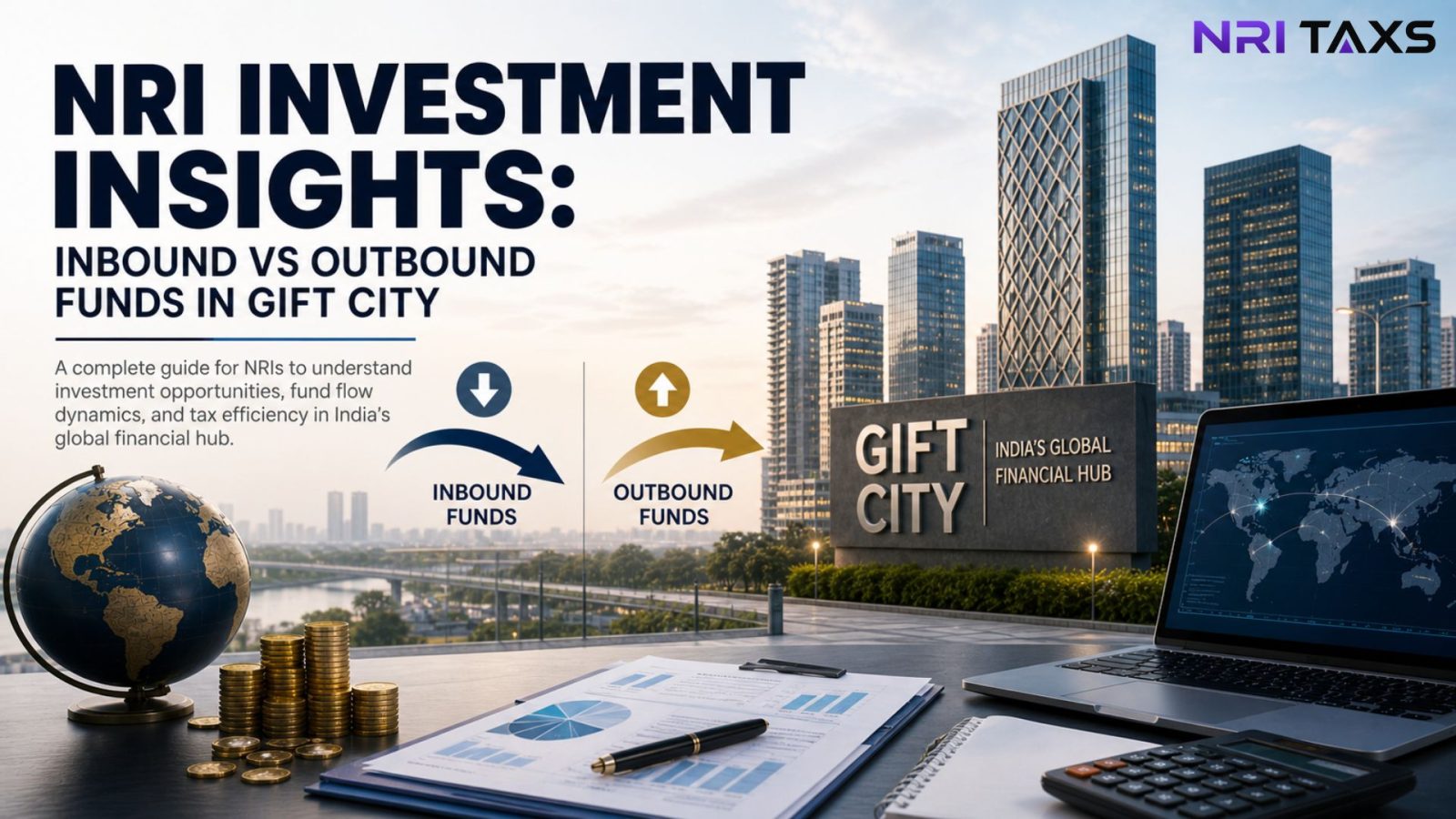
GIFT City has become a major financial hub for global investors, especially NRIs looking for efficient and regulated investment opportunities in India. In this context, understanding Inbound Funds vs Outbound Funds in GIFT City is very important for building a smart investment strategy. Inbound funds generally bring foreign capital into India-focused opportunities, while outbound funds allow investors to access global markets through GIFT City structures. Both play a key role in portfolio diversification, tax efficiency, and long-term wealth creation.
For NRIs, choosing between these funds depends on risk appetite, return expectations, and investment goals. This guide will help you clearly understand how both fund types work, their differences, and how they can be used to maximize returns effectively.
Read Also:- How RNOR Status Helps Nris Save Tax On Investments?
What Are Inbound Funds?
Inbound funds are investment vehicles established within GIFT City that collect capital from foreign sources, including NRIs, and invest it in assets within India. Think of these funds as a structured gateway for international money to enter the Indian market. The primary purpose is to facilitate foreign investment into Indian securities, such as stocks, bonds, and private equity, through a regulated and tax-efficient environment.
These funds operate from the International Financial Services Centre (IFSC) in GIFT City, which provides a unique regulatory framework. By pooling resources in an inbound fund, NRIs can gain exposure to the Indian economy without directly navigating the complexities of mainland regulations. The fund manager, operating from GIFT City, handles the investment strategy, compliance, and administration, offering a streamlined experience for the investor.
Key Benefits Of Inbound Funds For Nris
Direct Access to Indian Markets
Inbound funds provide a simplified and direct route to invest in a wide range of Indian assets. For an NRI, this means gaining exposure to India’s growth potential without the operational hurdles of direct investing. The fund structure allows for participation in opportunities across public and private markets, all managed professionally from a single platform.
Simplified Regulatory Framework
GIFT City operates under a special regulatory body, the International Financial Services Centres Authority (IFSCA). This authority has created a more accessible and efficient environment for global investors. For NRIs, this translates to clearer rules, faster processing times, and a regulatory system designed to meet international standards, making the investment process more predictable.
Tax Efficiency
One of the key advantages of routing investments through GIFT City is the favorable tax regime. Inbound funds established in the IFSC receive certain tax exemptions and concessions on their income. This can lead to better net returns for investors. These benefits make it an attractive channel for NRIs looking to optimize their investment returns from Indian assets.
Professional Management
These funds are managed by experienced professionals with deep knowledge of the Indian market. This provides NRIs with access to expert research, risk management, and strategic asset allocation. Instead of making individual investment decisions from abroad, investors can rely on the fund manager’s expertise to navigate the market and identify promising opportunities.
What Are Outbound Funds?
These are investment funds set up in GIFT City to pool capital from Indian sources, including from NRIs’ NRO accounts, and invest it in international markets. These funds act as a channel for investors to diversify their portfolios beyond India and gain access to global assets, such as US technology stocks, European real estate, or other international securities.
The structure allows investors to participate in global economic growth from a regulated Indian base. An outbound fund in GIFT City can invest in a variety of international financial instruments, managed by professionals who understand global market dynamics. This offers a structured and compliant way to build an international portfolio without moving capital to a foreign jurisdiction directly.

Key Benefits Of Outbound Funds For Nris
Global Portfolio Diversification
For NRIs who hold significant assets in India, outbound funds offer an excellent way to diversify geographically. Investing in different economies and markets helps reduce concentration risk tied to a single country. This strategy allows for a more balanced and resilient investment portfolio over the long term.
Access to Global Opportunities
Outbound funds open doors to investment opportunities that may not be available in India. This includes investing in globally recognized companies, emerging technology sectors, or specific international markets with high growth potential. It allows NRIs to participate in worldwide economic trends directly from the GIFT City platform.
Regulated International Exposure
Investing internationally through an outbound fund in GIFT City provides a secure and regulated pathway. All operations are overseen by the IFSCA, ensuring compliance and investor protection. This gives investors confidence that their international investments are being managed within a robust legal and financial framework.
Potential Currency Hedging
Holding assets in different currencies, such as the US Dollar or Euro, can serve as a natural hedge against fluctuations in the Indian Rupee. For an NRI, this can be particularly useful for managing wealth across different currency zones. An outbound fund automatically provides this exposure as part of its investment strategy.
Key Differences: Inbound Funds Vs Outbound Funds
Investment Direction & Scope
When it comes to Inbound Funds Vs Outbound Funds then let us tell you that the most fundamental difference lies in the direction of capital flow. Inbound funds channel foreign capital into India, with an investment scope limited to Indian assets. In contrast, outbound funds direct capital from India to the rest of the world, with an investment scope covering global assets. Your choice depends on whether your goal is to invest in India or to diversify outside of it.
Regulatory Requirements
While both fund types are regulated by the IFSCA, their compliance requirements differ. Inbound funds must adhere to regulations concerning foreign investment into India, focusing on capital sourcing and deployment within the country. Outbound funds are governed by rules for overseas investments, ensuring that capital flows out of India in a compliant manner.
Tax Implications
Another difference between Inbound Funds and Outbound Funds is tax implications. The tax treatment for each fund type varies. Inbound funds in GIFT City enjoy specific tax benefits on income generated from Indian assets, which can be passed on to investors. For outbound funds, the tax implications are related to gains from international assets, and the rules depend on the asset class and the investor’s tax residency status. It is wise to seek advice on this aspect.
Returns and Risk Profile
If we talk about Inbound Funds Vs Outbound Funds then let us tell you that the risk and return profiles are directly tied to their underlying markets. The performance of an inbound fund is linked to the health of the Indian economy and its financial markets. An outbound fund’s performance is correlated with global market trends and the economies of the countries it invests in. Inbound investing concentrates risk in India, while outbound investing spreads it globally.
How To Invest In Gift City Funds For Nris?
- Eligibility Check:- The first step is to confirm your NRI status as defined by the Foreign Exchange Management Act (FEMA). Next, review the specific eligibility criteria of the fund you are interested in. Different funds may have different minimum investment requirements or other conditions for participation.
- Select Fund Type:- Based on your financial goals, decide whether an inbound or an outbound fund is the right choice for you. If you want to invest in India, look for inbound Alternative Investment Funds (AIFs) or mutual funds. If you aim for global diversification, explore outbound fund options available in GIFT City.
- Open IFSC Account:- To invest through GIFT City, you will need to open a bank account with a banking unit located in the IFSC. This account will be used to handle transactions in foreign currency. Several major Indian and international banks have branches in GIFT City to facilitate this process.
- Complete KYC & Fund Account:- You will need to complete the Know Your Customer (KYC) process by submitting required documents like your passport, visa, and proof of address. Once KYC is verified, you can proceed to open an account directly with the asset management company or fund house managing the chosen fund.
- Invest and Monitor Portfolio:- After your account is set up, you can transfer funds from your NRE, NRO, or FCNR account to your IFSC bank account and then into the fund. Once invested, it is important to regularly monitor the performance of your portfolio and stay updated on market trends to ensure your investments remain aligned with your objectives.
Conclusion- Inbound Funds Vs Outbound Funds
Choosing between inbound and outbound funds in GIFT City depends entirely on an NRI’s investment strategy. Inbound funds are the ideal vehicle for those looking to capitalize on India’s economic growth through a streamlined and efficient channel. Outbound funds, on the other hand, are designed for investors seeking to diversify their wealth across global markets. Both options leverage GIFT City’s unique regulatory and tax advantages.
Looking toward 2026, we expect GIFT City to further streamline these processes, making both fund types even more accessible for global investors. As the ecosystem matures, the range of available funds and investment strategies is likely to expand, offering NRIs more sophisticated tools to manage their wealth effectively.
Disclaimer
The content published on NriTaxs is intended for informational purposes only and does not constitute legal, tax, or financial advice. Readers are encouraged to consult qualified professionals before making any decisions based on the information provided.








Related Articles